Pandemic Emergency Financing Facility
Designing a centralized platform to connect pandemic response projects and global sponsors through clear information architecture, structured listings, and intuitive navigation.
Project Overview
The Pandemic Emergency Financing Facility (PEF) was established by the World Bank to provide an additional source of financing to help the world's poorest countries respond to cross-border, large-scale disease outbreaks.
This project focused on creating a centralized digital platform where pandemic response projects and global sponsors could connect seamlessly through clear information, structured listings, and intuitive navigation. The goal was to redesign the existing web presence into a modern, user-friendly application that effectively communicated complex financial and health data to diverse stakeholders — including donor governments, partner organizations, and the general public.
Global Reach
Serving 77 IDA-eligible countries worldwide
Emergency Response
Rapid funding disbursement during pandemics
Multi-Stakeholder
Connecting donors, governments, and organizations
The Challenge
The existing PEF platform suffered from fragmented information, complex navigation, and a dated interface that made it difficult for stakeholders to quickly access critical pandemic financing data.
Information Overload
Dense financial data and medical terminology made the platform overwhelming for non-expert users. Key information was buried across multiple pages with no clear hierarchy.
Poor Navigation
Users struggled to find relevant resources and funding information. The site structure lacked a logical flow, causing high bounce rates on critical pages.
Non-Responsive Design
The legacy interface was not optimized for mobile devices, limiting accessibility for stakeholders who needed on-the-go access during emergency situations.
Data Visualization
Complex financial and health data lacked meaningful visual representation, making it difficult for sponsors and decision-makers to grasp impact at a glance.
Project Goals
Simplify Complex Information
Transform dense pandemic financing data into clear, digestible content that both expert and non-expert users can easily understand and act upon.
Improve Navigation & Discoverability
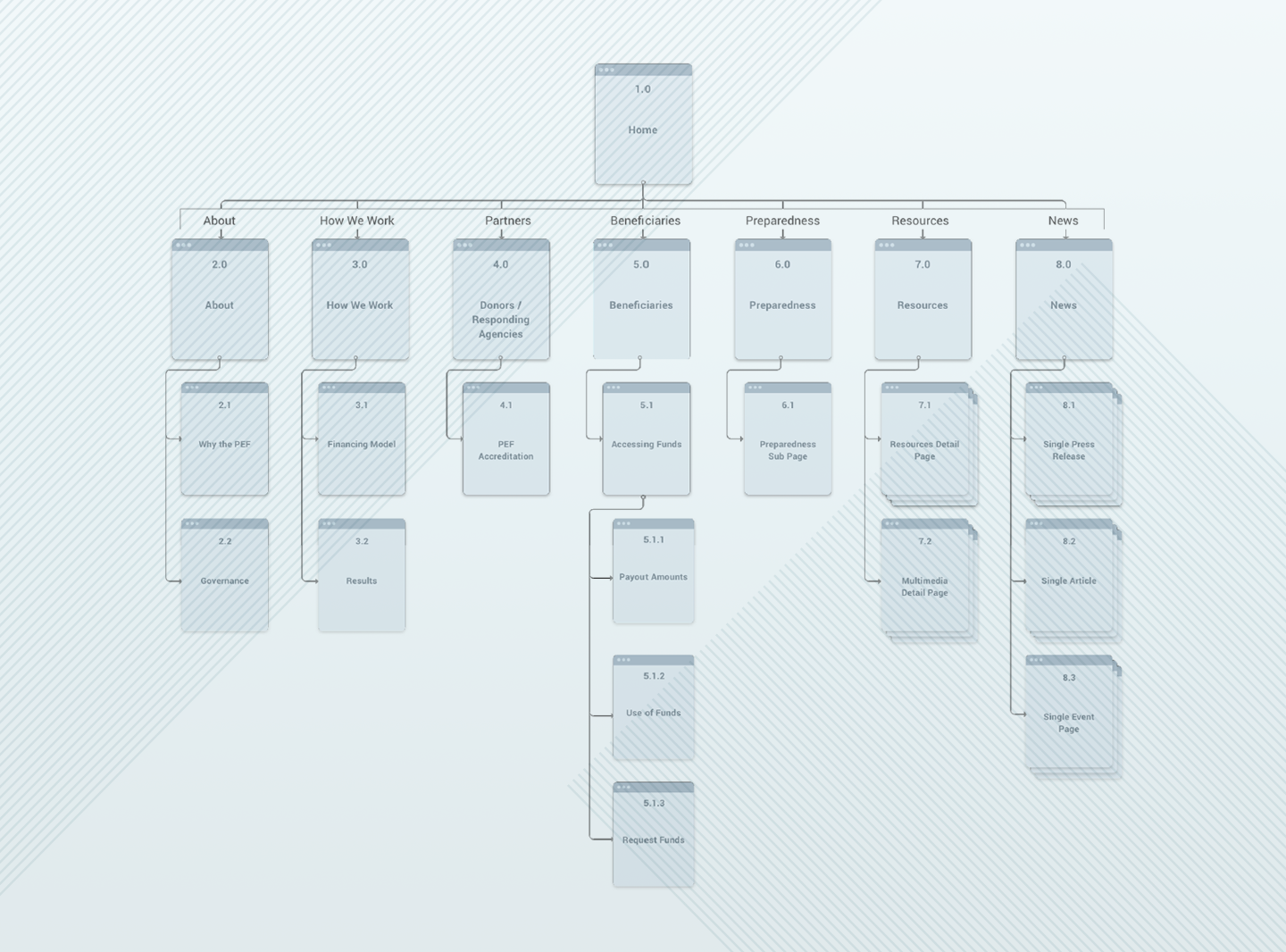
Design an intuitive information architecture ensuring users can quickly find resources, news, funding details, and partner information within 3 clicks.
Build Responsive Experience
Create a fully responsive web application that delivers a seamless experience across desktop, tablet, and mobile devices for emergency access scenarios.
Enhance Data Visualization
Introduce interactive charts, maps, and infographics that make financial allocations, pandemic impact data, and program outcomes immediately comprehensible.
Strengthen Brand Identity
Establish a modern, trustworthy visual language that reflects the urgency and professionalism of the World Bank's pandemic response initiative.
Ensure Accessibility & Compliance
Meet WCAG 2.1 AA standards to guarantee the platform is accessible to all users, including those with disabilities, across different regions and connectivity levels.
Design Process
The design process followed a structured UX workflow to ensure every decision was informed by research and validated through iteration.
Problem Understanding
Conducted stakeholder interviews and audited the existing platform to identify pain points, user needs, and business objectives for the PEF website.
Information Architecture
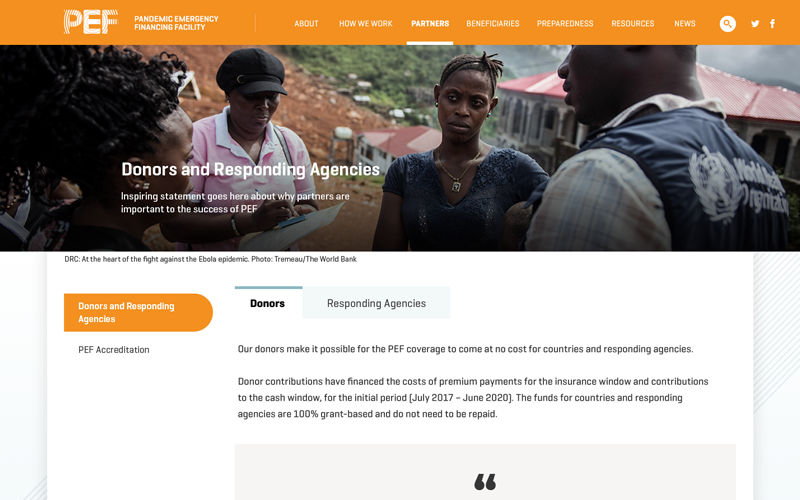
Organized content into logical groupings — news, resources, partners, and contact — creating a site map that supports intuitive wayfinding.
User Flow Mapping
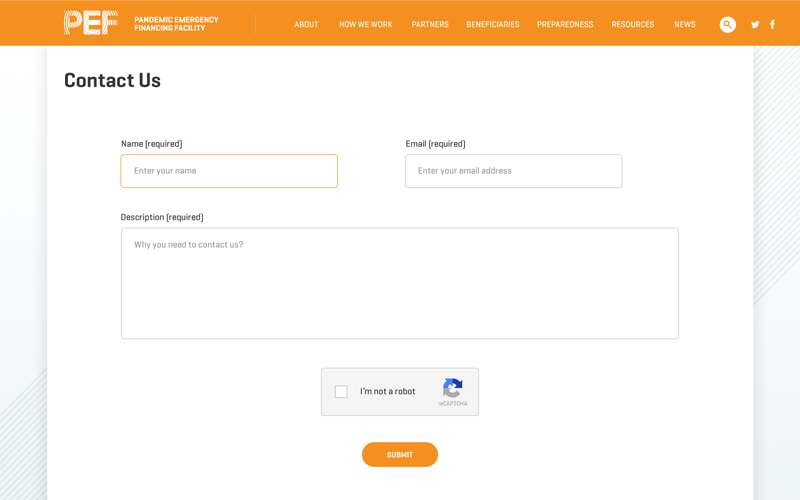
Mapped critical user journeys — from discovering funding details to accessing news and contacting the organization — optimizing each path for efficiency.
Wireframing
Created low-fidelity wireframes to establish layout structure, content hierarchy, and interaction patterns before committing to visual design.
UI Design
Developed high-fidelity mockups in Adobe XD with a clean, professional aesthetic — using the World Bank's brand guidelines as a foundation.
Prototype Creation
Built interactive prototypes to demonstrate navigation flows, micro-interactions, and responsive behaviors for stakeholder review and testing.
Iteration & Refinement
Gathered feedback from stakeholders and conducted usability sessions to refine layouts, improve content flow, and polish the final UI deliverables.
Final Outcome
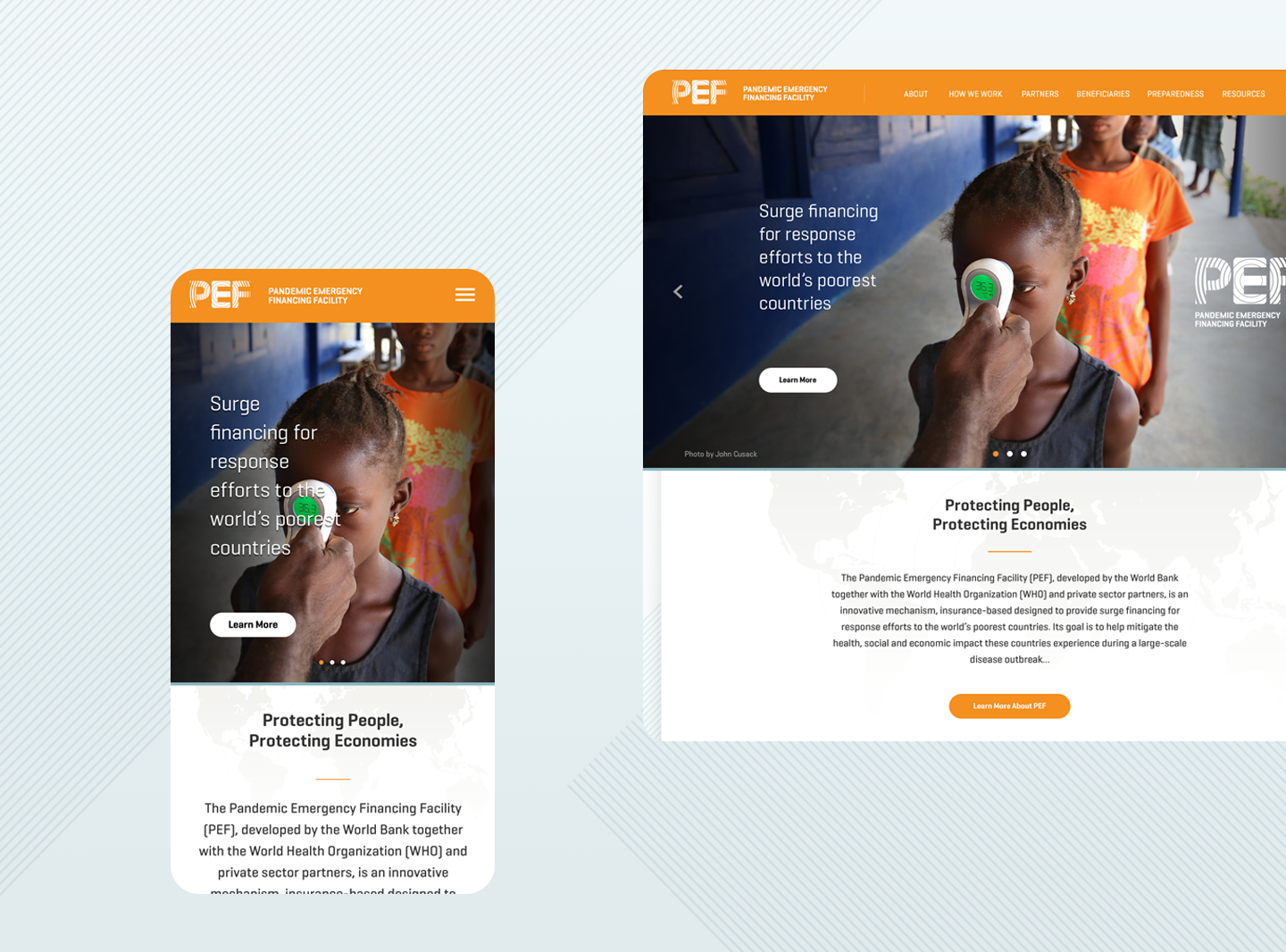
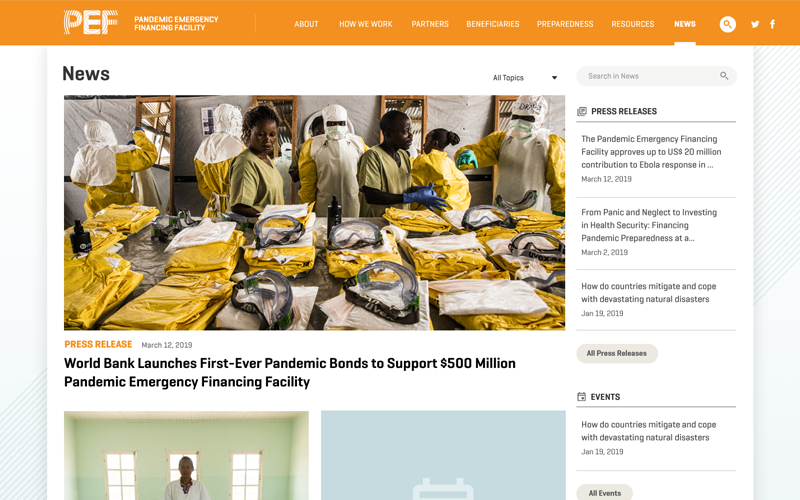
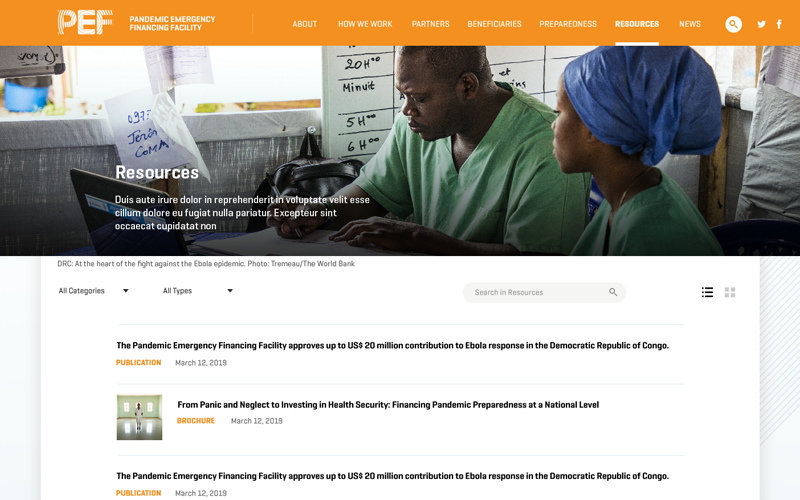
The redesigned PEF platform delivers a cohesive, modern experience that enables stakeholders to access critical pandemic financing information with ease and clarity.
Results & Impact
The redesigned platform delivered measurable improvements across user engagement, accessibility, and stakeholder satisfaction.
Streamlined User Journeys
Reduced the average number of clicks to reach critical funding information from 7 to 3, significantly improving task completion rates.
Responsive Across All Devices
The platform now delivers a consistent experience on desktop, tablet, and mobile — critical for emergency access during pandemic scenarios.
Enhanced Data Presentation
Interactive visualizations replaced static tables, making complex financial data immediately understandable for decision-makers.
Positive Stakeholder Feedback
The World Bank team praised the modern, professional redesign for aligning with their brand standards while dramatically improving usability.